

New biodiversity report reveals South Oxfordshire’s natural wealth
8 April 2026
South Oxfordshire District Council has published a new biodiversity report. For the first time the council has created a report which brings together information about the district’s natural environment with details of how the council is helping nature recovery.
Some highlights from the report
Sites in the district identified as being significant, locally, nationally and internationally:
- Four special areas of conservation – Aston Rowant, Chilterns Beechwoods, Hartslock Wood, Little Wittenham
- 38 SSSIs (sites of special scientific interest) covering 1,550 hectares
- A national nature reserve at Aston Rowant renowned for its flower-rich chalk grassland, beech woodland and juniper scrub
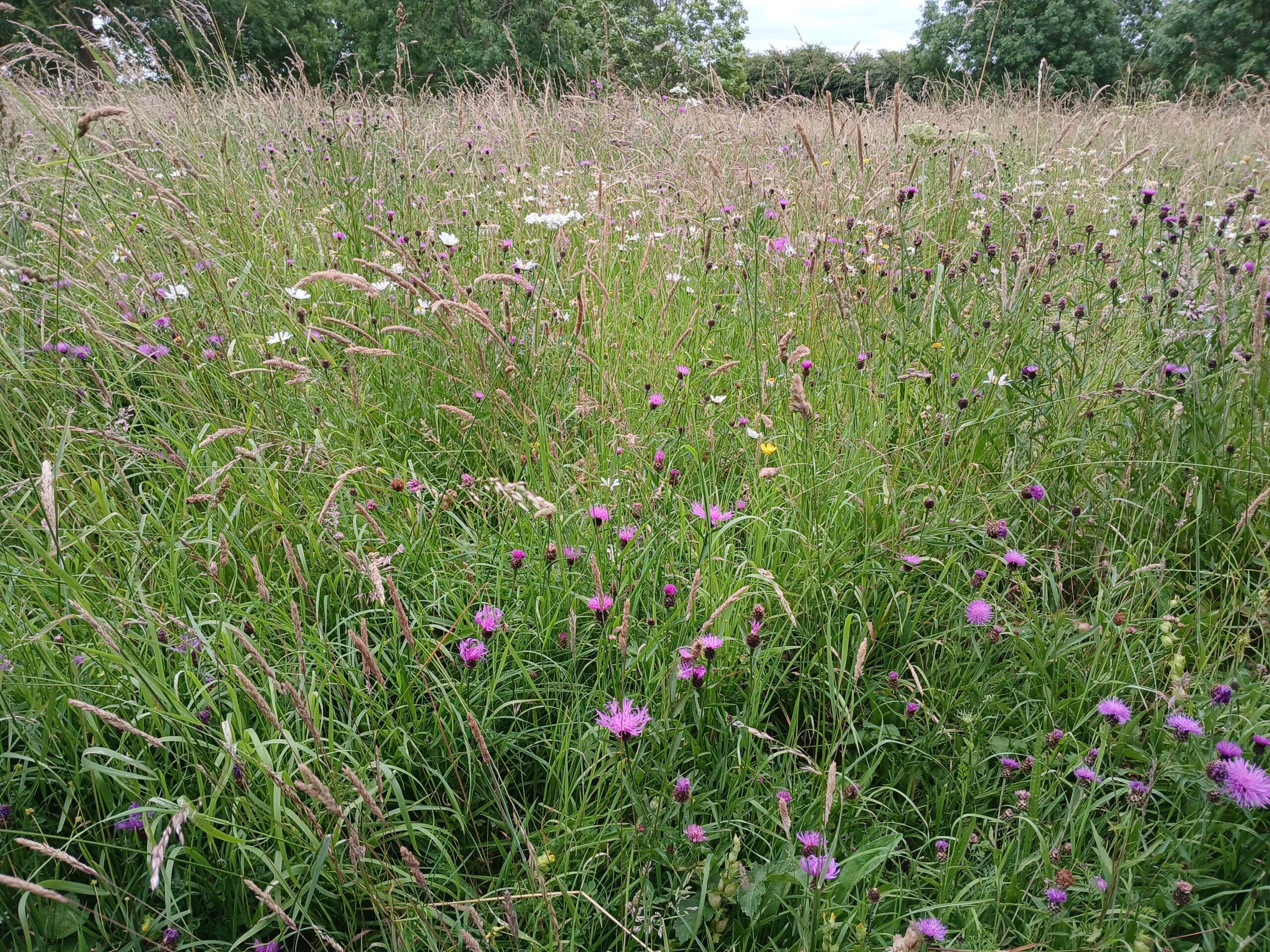
- Four local nature reserves – Cuttle Brook, Ewelme Watercress Beds, Mowbray Fields (pictured above), Watlington Chalk Pits.
The report includes details of how the council is working to prioritise biodiversity on its own land for example, the council is actively managing more than 40 per cent of its land for the benefit of nature. The report also details all the council’s plans and policies that are designed to promote nature recovery and to protect our most important habitats and species from damage in the planning system.
Councillor Mike Giles, South Oxfordshire District Council Cabinet Member for Climate Action and Nature Recovery said: “The council included nature recovery as one of its key priorities in its council plan and achieves much through partnership work with lots of wonderful local organisations and communities who share this goal. And to that end we are delighted to announce that we are launching our new Climate Action Fund later this year for projects which support climate action and nature recovery. This will add to our existing funding to help biodiversity in the district.”
The council plays an active role in helping to protect and restore its rich natural heritage by supporting several key partnerships, including the Local Nature Partnership, the National Landscapes, Thames Valley Environmental Records Centre (TVERC) and the Local Wildlife Sites Project.
The Trust for Oxfordshire’s Environment (TOE) oversees the council’s biodiversity grant scheme. This scheme gives £50,000 per year using funds from Community Infrastructure Levy (CIL) paid by developer contributions. To date, £85,624 has been awarded in grants to 13 projects across South Oxfordshire.
Councillor Giles added: “I am delighted to endorse this new report on the district’s nature and what the council is doing to help restore it. South Oxfordshire is favoured with a rich variety of wildlife but that means that those of us living here have a responsibility to ensure the best outcome for all this natural wealth.”
South Oxfordshire’s biodiversity duty report is a requirement of the Environment Act (2021) which requires all local authorities to consider their “biodiversity duty’ – in other words – the measures they have taken and plan to take to protect nature over a five-year period.
ENDS
Notes to editors
The new 2026 South Oxfordshire biodiversity duty report can be downloaded here
More information on the council’s nature recovery work including meadow areas, countryside sites, tree planting, partnership work, nature reports, rivers and planning is available on the nature recovery page on its website.
The council’s planning team, including several ecologists, considers how nature development interact and the council has pioneered ‘Biodiversity Net Gain’ – where the development of land will lead to losses of biodiversity, developers can pay to create habitat of equal or greater value to wildlife. Between 2013 and 2021 the council has raised more than £850,000 towards off-site biodiversity gains in addition to increased biodiversity achieved on development sites.
Biodiversity and planning at South Oxfordshire District Council is on this page


