

Leader’s statement – 22 October 2026
Published Wednesday 28 October 2026
Cllr Maggie Filipova-Rivers, Leader of South Oxfordshire District Council, delivered her Leader’s statement to Council at the meeting on Thursday 22 October 2026.
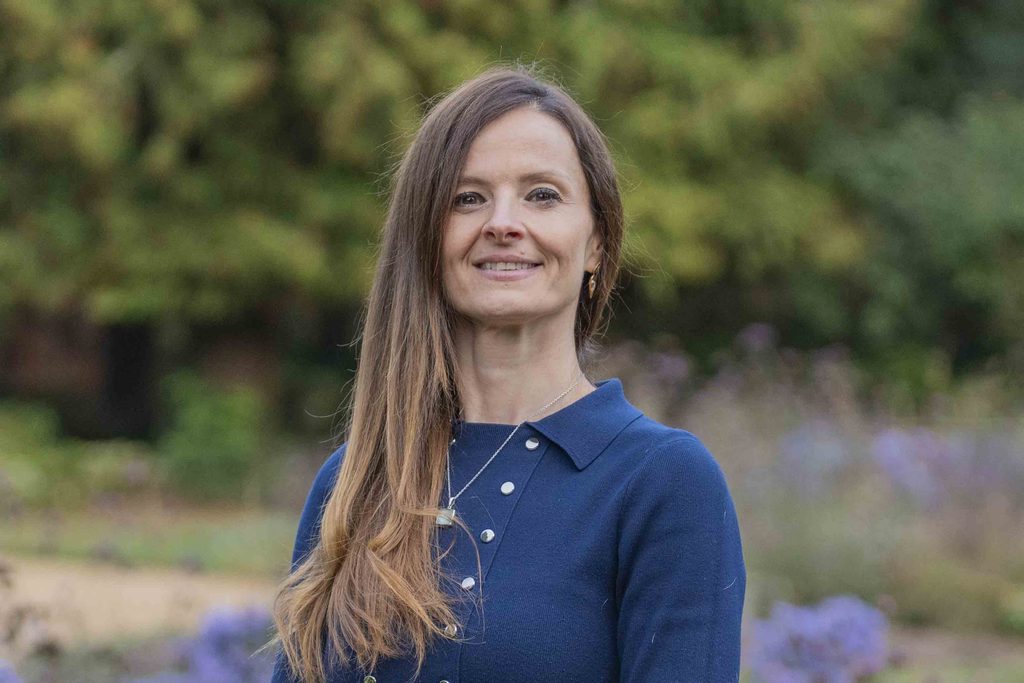
Above: Cllr Maggie Filipova-Rivers
Local Government Reorganisation
As you are aware, the Government has asked all affected councils to pause implementation of LGR pending a review. We do not yet have the outcome of that review, and as such do not have clarity about the process ahead. We will keep you updated as soon as an announcement is made. We are expecting this fairly soon, but we have to see.
I am acutely aware that this limbo situation is far from ideal and it is impact is acutely felt among officers, the wider system and our ability to plan.
Devolution
Following the letter that was sent by Thames Valley Leaders to the Minster in August, a letter was received in response last week agreeing to a meeting with the leaders across the Thames Valley – that meeting took place yesterday. The outcome of the meeting was that:
- The only geography acceptable to Government is for a Thames Valley MSA is Berkshire, Oxfordshire and Swindon.
- The potential for Buckinghamshire to join downstream could be a possibility if that is what they wish, but given the current position of Bucks, government were not prioritising them for now.
- The department have been negotiating with Treasury on funding for the MSAs
- This is the final phase of devolution for this Parliament, so if we are not able to take the opportunity now, we will have to wait until the next Parliament.
- The Minister has asked for a response by Monday lunchtime with unanimity on geography if we wish to proceed to the next stage because they want to make announcements as part of the Budget next Wednesday.
- Local autonomy is still reserved which means that ultimately all Council’s will have to take the proposals through their governance processes.
- The Minster also provided some outline figures of potential funding and powers that could be available to a Thames Valley MSA.
It is fair to say that some of the funding and powers aspects appear to be appealing but also, it will require a leap of faith. I am currently trying to understand the potential benefit for our area.
Although the decision remains with the leader of OCC, we will be working on an SODC response to the binary choice presented by government. It is fair to say that this is a very important decision with lasting impact so myself and the cabinet will be thinking carefully through the pros and cons as we formulate our position.
If a positive decision is reached and the announcement was made in the Budget, the timeline would be for councils to approve the proposal for consultation at the end of this calendar year, with a consultation running in January 2027, and then the decision would come to respective councils for approval and final proposal to be submitted to Government in March 2027. The Strategic Authority would be established in May 2027, with the election of Mayor taking place in May 2028.
Oxford Growth Commission/Development cooperation
The Oxford Growth Commission final report is due to be published in November and include a proposal for creation of a Greater Oxford Development Corporation.
As Leader I have been promised a meeting with the Chair of the Growth Commission in advance of the final report being published to share my views on the proposals for the Development Corporation.
A consultation on the Development Corporation proposal is due before end of this calendar year with a period of consultation to follow into the new year. The Development Corporation would then be formalised in law by summer 2027 and a form of interim governance put in place until it took powers from 2028.
There is a lack of clarity as yet as on what role a Mayor would play in a Greater Oxford Development Corporation should an MSA be created.
Budget setting
We are now progressing the budget-setting process for 2027/28. Under the original Local Government Reorganisation (LGR) timetable, this was expected to be the final budget set by this council before the transition to new unitary arrangements.
However, while the original timetable remains a possibility, it now seems increasingly likely that implementation will be delayed. We must therefore plan responsibly for the possibility that this council will continue operating for up to a further three years.
This means maintaining a sustainable financial position over the medium term, rather than planning solely for a final year of operation. In particular, we need to manage the financial pressures arising from essential service growth, beyond normal inflation, while working within the budget framework agreed by Full Council in the MTFP.
I am keen for this to be a collaborative and transparent process, with opportunities for constructive input from across the council. Having reviewed the proposed outline of the process, I am pleased to confirm that it includes dedicated sessions with opposition groups, ensuring that their views and priorities can help inform the development of the budget before final decisions are made.
Housing update
The demand for social and affordable housing continues to grow across the country, and we are not immune to that. Whilst most social housing in our area is provided by Soha, we want to pursue our own plans, with a focus on temporary accommodation to reduce the reliance on B&B and hotels.
Since the approval of our Housing Delivery strategy in 2022 we have looked to grow the number of council-owned housing stock, and have had eight schemes running, or which five have completed.
The current stock owned by the council numbers 57 homes. We have another approx. 17 properties to purchase through the government’s Local Authority Housing Fund scheme 4 and our own capital scheme approved in 2025, and hope to complete purchase of those by spring 2027. We are also developing our own housing at the Broadway site in Didcot, again supported by funding from Homes England. This will have nine homes and is due to be handed over to our housing landlord team by the end of 2027, who will then let to those on the housing register.
Preventing homelessness from happening is the best outcome for everyone, and the council’s homelessness prevention rates continue to be impressive. The figure for September was 83% of cases, which compares to a national average of just over 50%.
In August the government also announced a new rough sleeping programme with the aim of offering support to all entrenched rough sleepers by Christmas. The council has been allocated £122,859 by the government to provide such a scheme and officers are working at pace to ensure we have something available by December. This includes accommodation and officer support to help rough sleepers move away from the streets in a safe and sustainable way.
Community cohesion
Since South Oxfordshire District Council passes a motion ‘Fair Treatment for All Residents’ in October 2025, committing to community cohesion work, to increase support to our already close knit communities, a lot has happened.
We have implemented the new ‘Be Together’ programme which is a series of small community-led initiatives, ranging from yoga, ‘have a go’ days and community arts events to bike repairs and food skills courses. Its core aim is to foster social participation, cultural understanding, and mutual support. It also aims to build resilience within our communities.
In recent weeks we have moved forward with our longer-term ambition to develop our first Community Cohesion Strategy, to help build stronger communities, develop connections and foster neighbourhood togetherness across the district. This will establish a strategy with a practical delivery plan, working with key partners over a five-year period.
In order to deliver this ambition, we have linked with ‘Belong – The Cohesion and Integration Network’, who are experienced in supporting the development of community cohesion strategies and have worked with a number of local authorities. This partnership has in recent weeks attracted external funding of £100,000, which will be used for projects to deliver the strategy action plan in our district.
During September through to November representatives from Belong will be out and about in the district on behalf of the Councils, talking to a range of organisations, community groups and individual residents, as they gather evidence and insight for the strategy, there is also an Online community survey as we try to capture as many views as possible.
As members I would encourage you to support this work and talk to Cllr Heritage if you think a group or organisation should be consulted by Belong through the consultation period, and I would also be grateful if you could complete the online survey and encourage others to complete it over the coming weeks.
AI motion
There is a great deal in this motion that I agree with. AI raises important questions about environmental sustainability, privacy, accountability and the future of public services. These are legitimate concerns, and we absolutely should take them seriously.
However, I have two fundamental concerns with the motion in its current form.
- Firstly, it brings together two very different issues: the environmental impact of data centres and the responsible roll out of AI within this council. Both deserve proper consideration, but they require very different policy responses. Combining them into a single motion makes it difficult to support one without necessarily endorsing the approach taken to the other.
- Secondly, I don’t think the motion presents a sufficiently balanced picture of the opportunities and risks.
On data centres, I fully recognise the concerns about electricity consumption, water use and pressure on infrastructure, particularly in an area like ours where water resources are already under significant pressure.
But the reality is that AI is here to stay. Its use is expanding rapidly, and the infrastructure needed to support it will continue to grow.
We also need to consider the UK’s technological independence. The UK needs domestic computing capacity to avoid excessive dependence on infrastructure controlled by other countries.
And technology itself is evolving. Semiconductors are becoming more energy-efficient, cooling technologies are improving, and there are opportunities to capture and reuse waste heat.
Indeed, our neighbours at Vale of White Horse are commissioning a feasibility study to explore whether waste heat from proposed data centres near Didcot could support a district heating network. That is precisely the sort of constructive approach I would like us to take.
Of course, technological improvements alone will not solve the problem, particularly if demand continues to grow. But surely our focus should be on mitigating environmental impacts, setting robust standards and maximising local benefits, rather than taking what feels like a predominantly oppositional position.
Turning to the council’s own use of AI, I strongly support the principles of transparency, data protection, non-discrimination and human oversight.
But we should also recognise the opportunities AI presents to improve services, reduce repetitive administrative work freeing up officers to focus on more complex and people facing work, increase accessibility and make better use of increasingly stretched council resources. Our approach must be proportionate.
It has come to my attention that a staff AI policy exists, and it is in broadly in line with the principles in this motion. I am also to understand that we as members do not have a remit over the staff policy. I would like to do some digging to understand exactly what input and how members can influence the responsible roll out of AI, not just for members but for the council as a whole.
Ultimately, I would prefer to see two separate pieces of work: one focused on ensuring data centres meet high environmental standards and deliver benefits for our communities, and another establishing a responsible, proportionate framework for AI use within the council.
I support much of the intention behind this motion, and I certainly don’t dismiss the concerns it raises. But I believe we should be shaping how this technology develops and is used, rather than simply to resist it.
For those reasons, I cannot support the motion in its current form, but I would be happy to work with proposers on a letter to government regarding the expansion of data centres in our areas and the very valid concerns raised. I will also ask the portfolio holder to work with officers to help us understand how as members we could influence the ethical role out of AI within the councils as a whole.


